Local guide from The Big Mack
Twin Lakes Colorado Fishing: Shore, Boat, Seasons & Rules
Choose Twin Lakes shore or boat fishing—or the Arkansas River—with current season, access, weather, family, license, and regulation checks.

Choose shore fishing for the simplest first outing, a boat only when ramp, inspection, and weather checks line up, and the Arkansas River when your group wants moving water instead of a high-mountain lake. Twin Lakes can reward patient anglers, but cold water, elevation, wind, and changing regulations make a current-conditions check part of every plan.
Quick choice: shore, boat, or river
- Shore: the lowest-logistics option for a short sunrise or evening session; confirm the exact public access point and parking before leaving.
- Boat: useful for covering deeper water, but only after checking the current ramp status, inspection requirements, wind forecast, and required safety equipment.
- Arkansas River: choose moving water and a river corridor experience; check current flows, weather, and closures before selecting a reach.
- First-time family: keep the first session short, practice casting away from crowds, and pair it with an educational stop rather than measuring the day by fish caught.
No option guarantees a catch. Pick the water and pace that fit the least-experienced person in the group.
When to fish Twin Lakes
The useful season is the one current conditions support—not a fixed calendar date.
- Open-water spring: wait for verified ice-off, legal access, and a usable launch if boating. Cold water and cold air require conservative planning.
- Summer: early and late sessions can avoid some wind and midday sun, but watch the full mountain forecast and leave the water when storms approach.
- Fall: cooling weather and shorter daylight change the plan. Carry insulating layers and finish before the return becomes cold or dark.
- Winter: ice fishing is a specialized activity. Never treat appearance, a social post, or a past report as proof of safe ice; use current local and official information and appropriate expertise. See our ice fishing at Twin Lakes and Turquoise Lake guide before planning a winter trip.
Colorado Parks and Wildlife keeps the current fishing hub, brochure, licenses, closures, and beginner resources. Recheck it for your actual dates.
Twin Lakes or the Arkansas River?
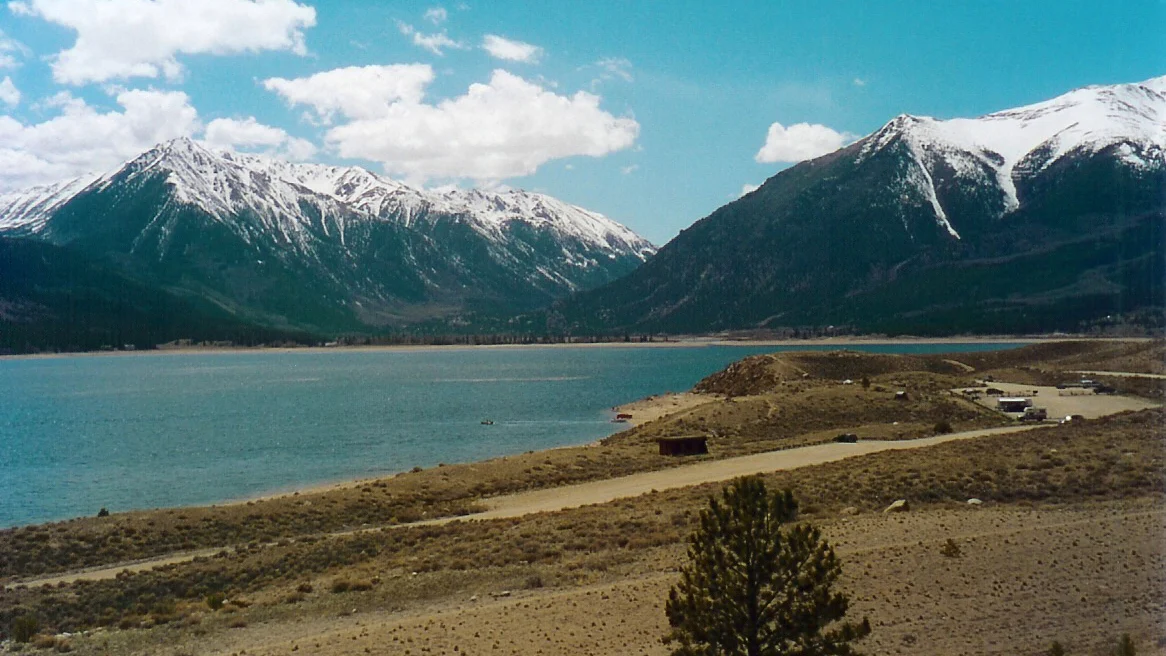
Choose Twin Lakes for a still-water day with mountain scenery, shore options, and—when current rules and conditions allow—boat access. The two reservoirs are large, cold, and exposed, so a calm-looking morning can become a very different afternoon.
Choose the Arkansas River corridor for moving water. Colorado Parks and Wildlife describes the Arkansas Headwaters Recreation Area as a long recreation corridor with Gold Medal trout water, but that label is not a promise about a specific access point, flow, closure, or fishing result. Check the page's current Conditions & Closures information before committing to a reach.
Groups can split the difference: one short lake session and a separate river day, with enough time to learn each setting instead of rushing both. For a nearby alternative lake, see our Turquoise Lake guide.
Lake trout, or Mackinaw
The Big Mack takes its name from the fish: Colorado Parks and Wildlife notes that lake trout are also called Mackinaw. Its lake trout species page explains that they are cold-water fish often associated with deeper water and that seasonal patterns matter.
That context helps set expectations:
- Shore fishing is accessible, but deeper-water fish may be out of reach at times.
- A boat can expand the water you cover; it does not guarantee success.
- Tackle, depth, presentation, and fish location change with season and conditions.
- The live regulation brochure—not this guide—controls legal methods, limits, and water-specific rules.
Ask a licensed local outfitter or current tackle source for technique help if the species and water are new to you.
A practical shore-fishing plan
Start with a legal public-access point that your whole group can reach comfortably. Do not assume every visible shoreline is public or every pullout is parking. Verify the access map, posted signs, and any temporary restrictions.
Bring:
- A current Colorado fishing license for each person who needs one.
- Sunglasses or eye protection, sun protection, water, food, and warm layers.
- A simple, organized tackle setup that minimizes loose hooks around children.
- A net and fish-handling tools appropriate to your legal plan.
- A bag for every scrap of line and packaging.
Give beginners room behind the cast, keep hooks controlled, and choose a turnaround time. If wind, lightning, cold, smoke, or access uncertainty develops, use another activity instead.
Boat access, inspections, and mountain weather
Before towing or inflating anything, use CPW's current fishing tools to confirm that Twin Lakes is listed for the planned activity, that the intended ramp is usable, and when aquatic nuisance species inspection is available. A ramp existing on a map does not mean it is open, staffed, or suitable today.
For every boating plan:
- Check the CPW boatable-waters and inspection information linked from the current fishing hub.
- Confirm ramp location, access hours, watercraft requirements, and required safety gear.
- Read the full wind and storm forecast—not only the temperature.
- Wear appropriate personal flotation devices and keep children within active supervision.
- Clean, drain, and dry watercraft and gear according to current CPW instructions.
- Keep a shore alternative so the group is not pressured to launch.
Twin Lakes is high, cold, and exposed. Turning around before weather arrives is a successful decision.
A first-timer or family day
For a first outing, optimize for learning and comfort, not hours on the water.
- Practice knots and casting before approaching other anglers.
- Choose a short session with a warm-up break already planned.
- Put one adult in charge of hooks and another in charge of children near water.
- Bring more dry layers and snacks than the schedule seems to require.
- End while the group is still comfortable.
The Leadville National Fish Hatchery visitor information can support an educational alternative; confirm current visitor details before driving. In the village, the Twin Lakes General Store fishing page is useful for stable local bait-and-supply context, but verify hours, inventory, and all conditions directly. Current CPW and land-manager notices outrank an older local banner.
Licenses, regulations, and closures: check live
Rules change, and different waters can have different provisions. This page intentionally does not copy bag limits, size limits, legal-method details, or closure dates.
Use this workflow immediately before fishing:
- Open the CPW fishing hub.
- Buy or confirm the correct current license.
- Open the current regulation brochure and look up Twin Lakes Reservoir or the exact Arkansas River reach you plan to fish.
- Review current closures, conditions, and any emergency restrictions.
- Recheck the same sources on the morning of the trip.
If a posted sign, current order, ranger instruction, or CPW notice conflicts with an itinerary, follow the current rule and change the plan.
Access, altitude, and low-impact habits
Twin Lakes sits at high elevation. Arrive hydrated, protect against intense sun, pace the first day gently, and take symptoms seriously. Cold water adds risk even when the air feels warm.
Keep fishing places usable:
- Pack out line, hooks, bait containers, and food waste.
- Avoid trampling wet shorelines and fragile vegetation.
- Keep wildlife wild and give other anglers space.
- Use established access and parking rather than creating a new path.
- Follow current fish-handling, harvest, fire, and sanitation rules.
For non-fishing options and a realistic group plan, use the Twin Lakes and Leadville things-to-do hub. Hikers can compare the Mount Elbert route guide, while leaf-season groups should read the fall-color and Independence Pass guide.
Make Big Mack your group base
The Big Mack sleeps up to 12 guests, giving a mixed-interest group room to divide into a short shore session, a scenic outing, or a full fishing day without pretending everyone needs the same plan. Keep licenses, rods, weather layers, and backup activities organized the night before.
Check your Twin Lakes dates and book direct. The cabin is a practical base for the water; the current conditions, regulations, and each guest's comfort decide the day.

